U.S. Department of State
Evaluating SMS Interventions to Prevent Passport Application Denials
Note: This case study presents a high-level summary of work conducted in a regulated environment. Additional details and visuals are intentionally limited due to confidentiality considerations and will continue to be refined over time.
OVERVIEWProblem
Many passport applications were denied after extended inactivity because applicants were unaware their applications had been suspended or unclear about what was needed to complete them. Reliance on mailed notifications meant critical updates were sometimes missed.
The organization explored SMS notifications as a way to alert applicants of their status, prompt timely action, and better understand barriers to completion—while reducing the operational burden of time-limited cases.
Outcome
I evaluated an automated notification pilot to understand applicant comprehension, response patterns, and downstream operational impacts. Findings informed refinements to notification messaging, clarified requirements for support processes, and helped stakeholders assess risk, readiness, and conditions for potential broader implementation.
PROJECTU.S. Department of State: Passport Services
Passport Services supports millions of applicants each year and operates within a highly regulated environment where clarity, timing, and process integrity matter.
Context & Constraints
This research was conducted following a pilot that surfaced operational challenges. The work required balancing customer impact with organizational readiness, risk, and feasibility.
INFORole
UX Researcher
Team
Cross-functional project team (product, operations, policy, CX)
Responsibilities
Led qualitative research with affected applicants to evaluate comprehension and response to automated notifications
Partnered with internal staff to assess operational impact, risk, and downstream workload
Mapped the end-to-end automated denial process through service blueprinting
Synthesized findings into CX requirements and decision-ready recommendations
RESEARCH PLANNING & ALIGNMENTWe defined what success meant for evaluating an automation pilot in a constrained, high-risk environment.
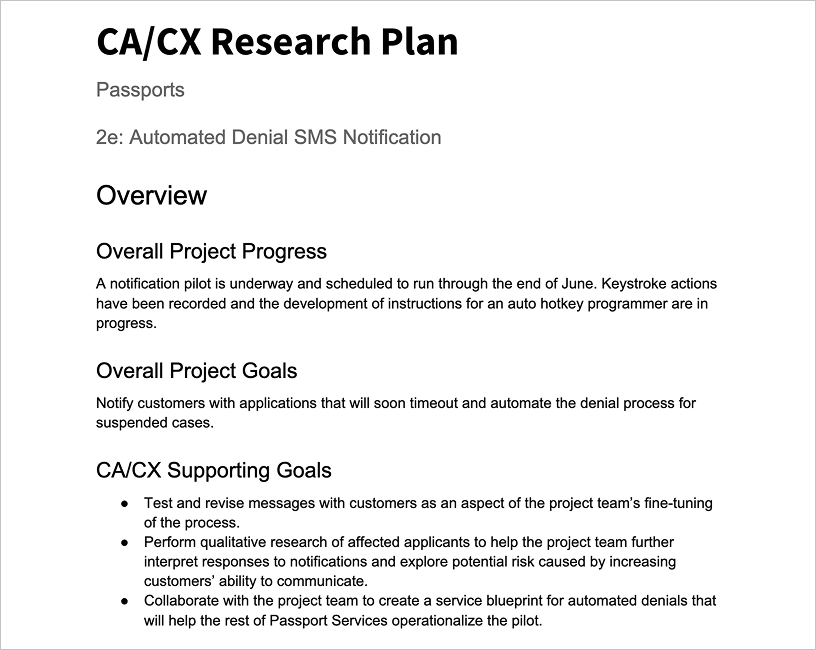
I created a research plan that clarified the problem space, research questions, and decision points the pilot needed to inform. This included defining learning goals around applicant comprehension, response behavior, and operational impact, as well as drafting interview and usability testing guides to support each phase of research.
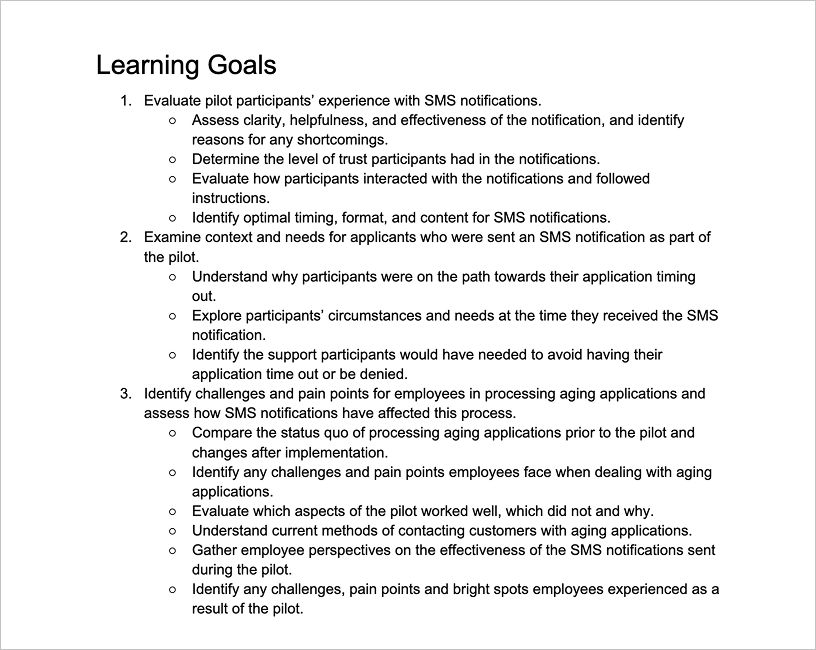
Excerpt from the research plan defining learning goals, methods, and phased timing
STAKEHOLDER & STAFF DISCOVERYWe grounded the research in operational reality by understanding how the pilot affected internal teams.
I conducted remote interviews with internal stakeholders and support staff to understand the existing denial workflow, where the pilot introduced friction, and what risks or constraints shaped leadership confidence in iteration or expansion. Findings were synthesized to surface dependencies, workload implications, and areas of misalignment between intent and execution.
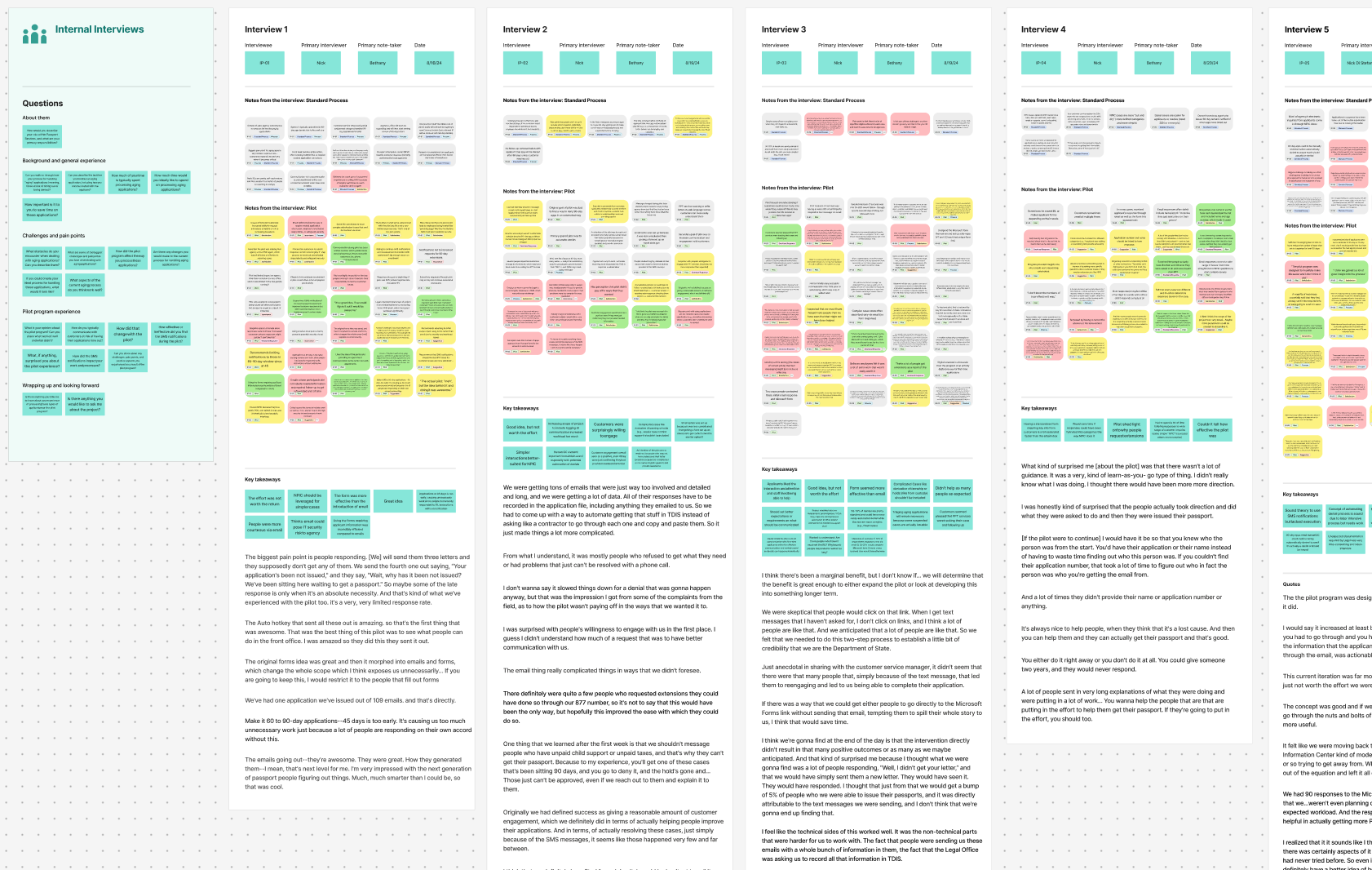
Notes and Observations Collected During Remote Staff Interviews
APPLICANT RESEARCH UNDER CONSTRAINTSWe explored how applicants interpreted time-sensitive notifications and what prevented completion.
I led qualitative interviews with affected passport applicants to understand how they perceived their application status, whether notifications prompted action, and what blockers prevented completion. Recruitment required flexibility due to narrow eligibility criteria and limited contact information for pilot participants, shaping both scope and interpretation of findings.
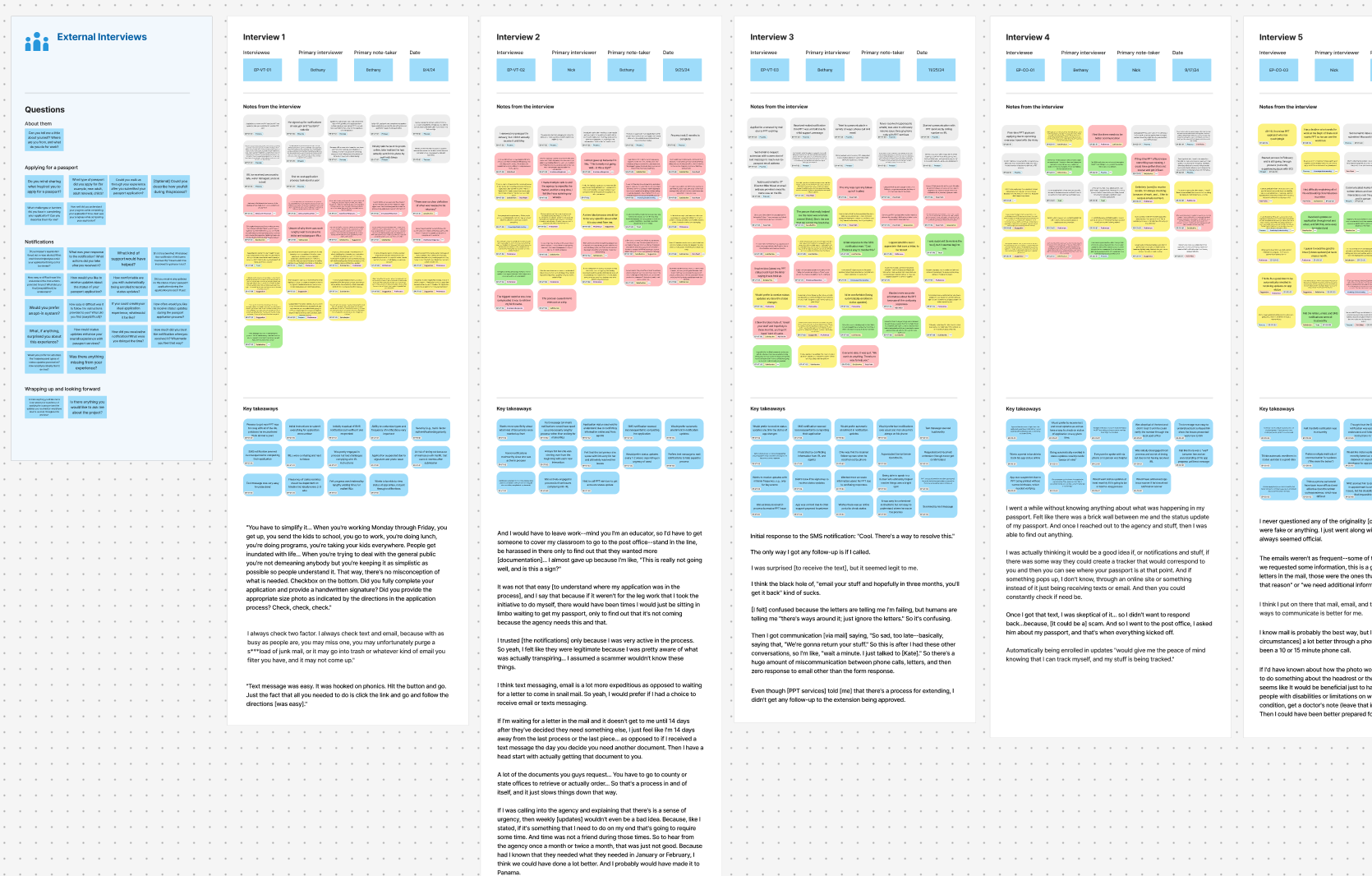
Notes and Observations Collected During Remote Applicant Interviews
INTERIM FINDINGS: BUILDING A SHARED UNDERSTANDINGWe established a shared understanding of how the pilot was experienced across customers and internal teams, surfacing gaps between intent, execution, and impact.
Following early stakeholder and applicant interviews, I synthesized interim findings to help partners understand how the automated denial SMS pilot was functioning within the broader passport process. These insights highlighted where applicants were confused about their application status or next steps, how reliance on mailed notifications contributed to missed updates, and where internal teams experienced unexpected workload or operational friction.
Rather than positioning findings as final conclusions, this interim shareout was used to align stakeholders on key themes, clarify risks, and inform ongoing discussions about feasibility, readiness, and where deeper evaluation was needed before considering iteration or expansion.
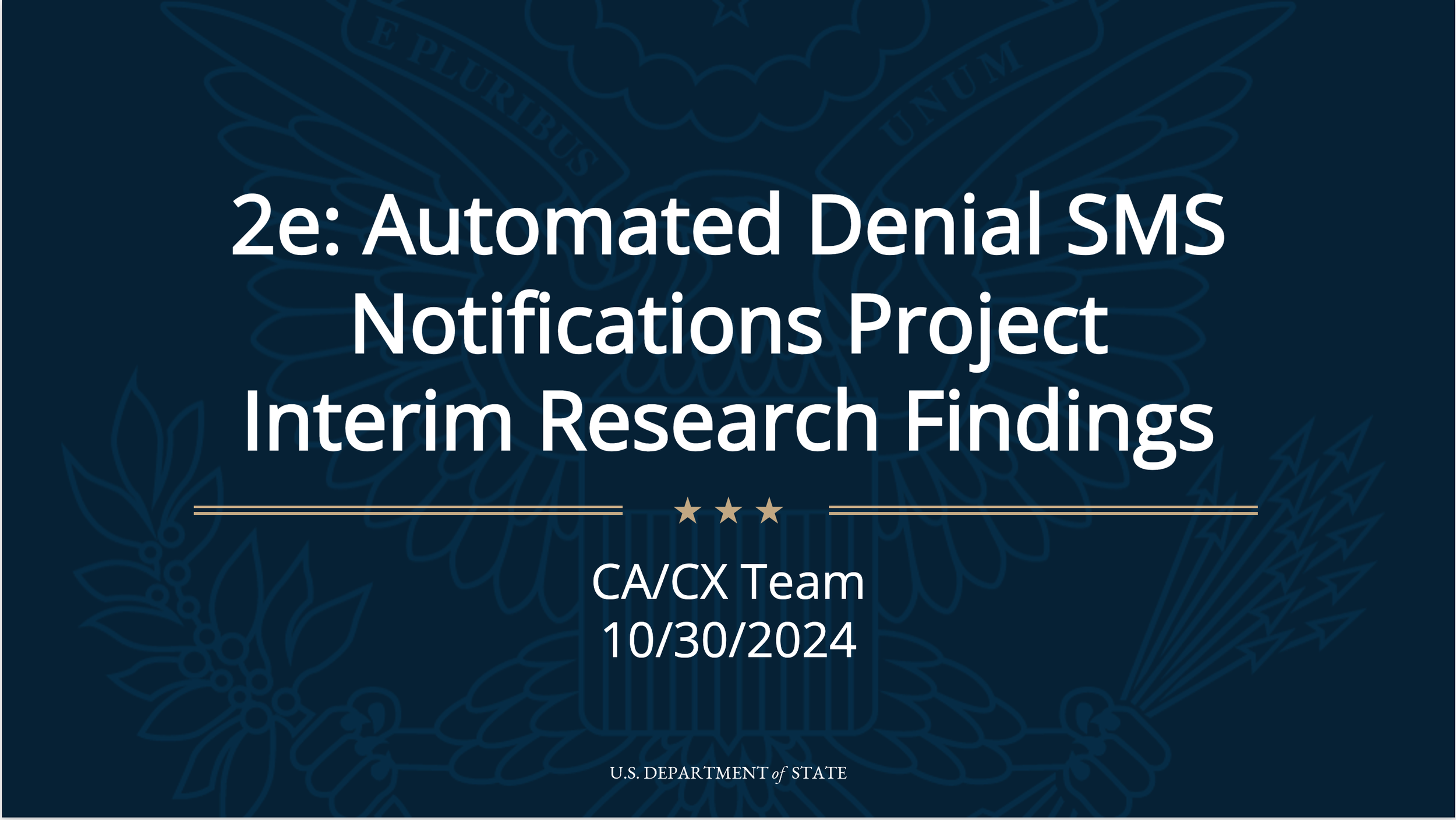
Interim research findings shared with stakeholders to align on customer impact, operational risk, and next areas of evaluation
SERVICE BLUEPRINTING & INTERIM ARTIFACTSWe made downstream impacts visible to support better decision-making.
To support cross-functional alignment, I created a service blueprint and process map documenting the end-to-end denial workflow, including touchpoints, handoffs, and operational dependencies. These artifacts were reviewed and iterated with stakeholders and used to discuss risk, feasibility, and readiness beyond the pilot itself. I also delivered interim findings and accessibility insights to inform ongoing conversations.
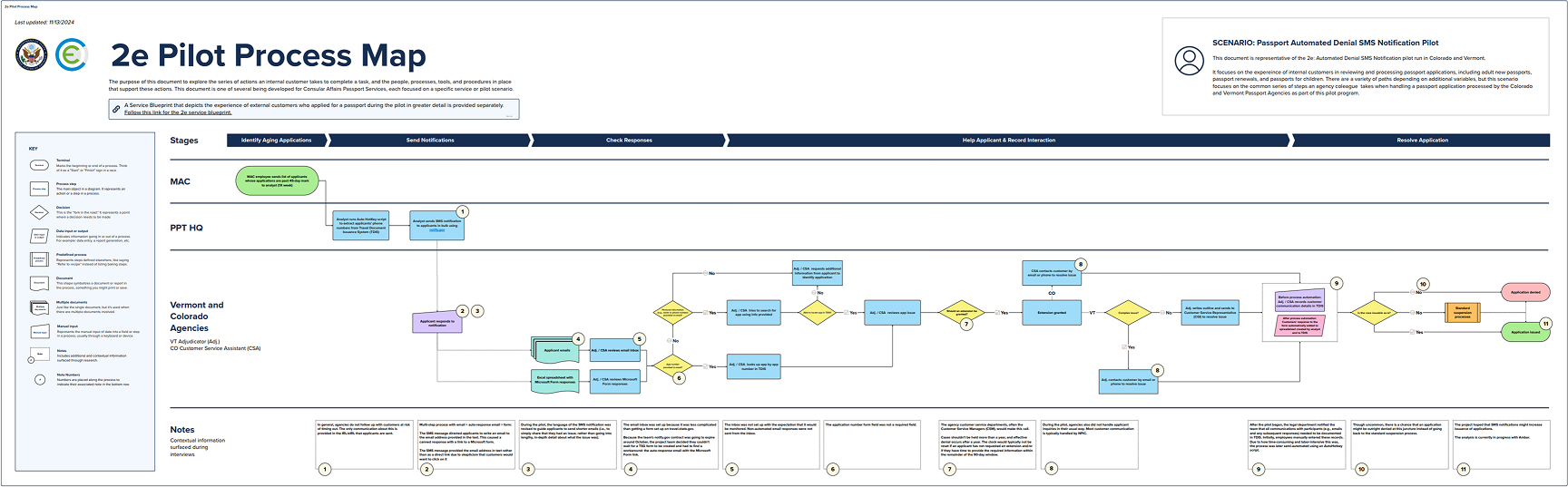
Process Map Detailing the Automated Denial Workflow and Decision Points
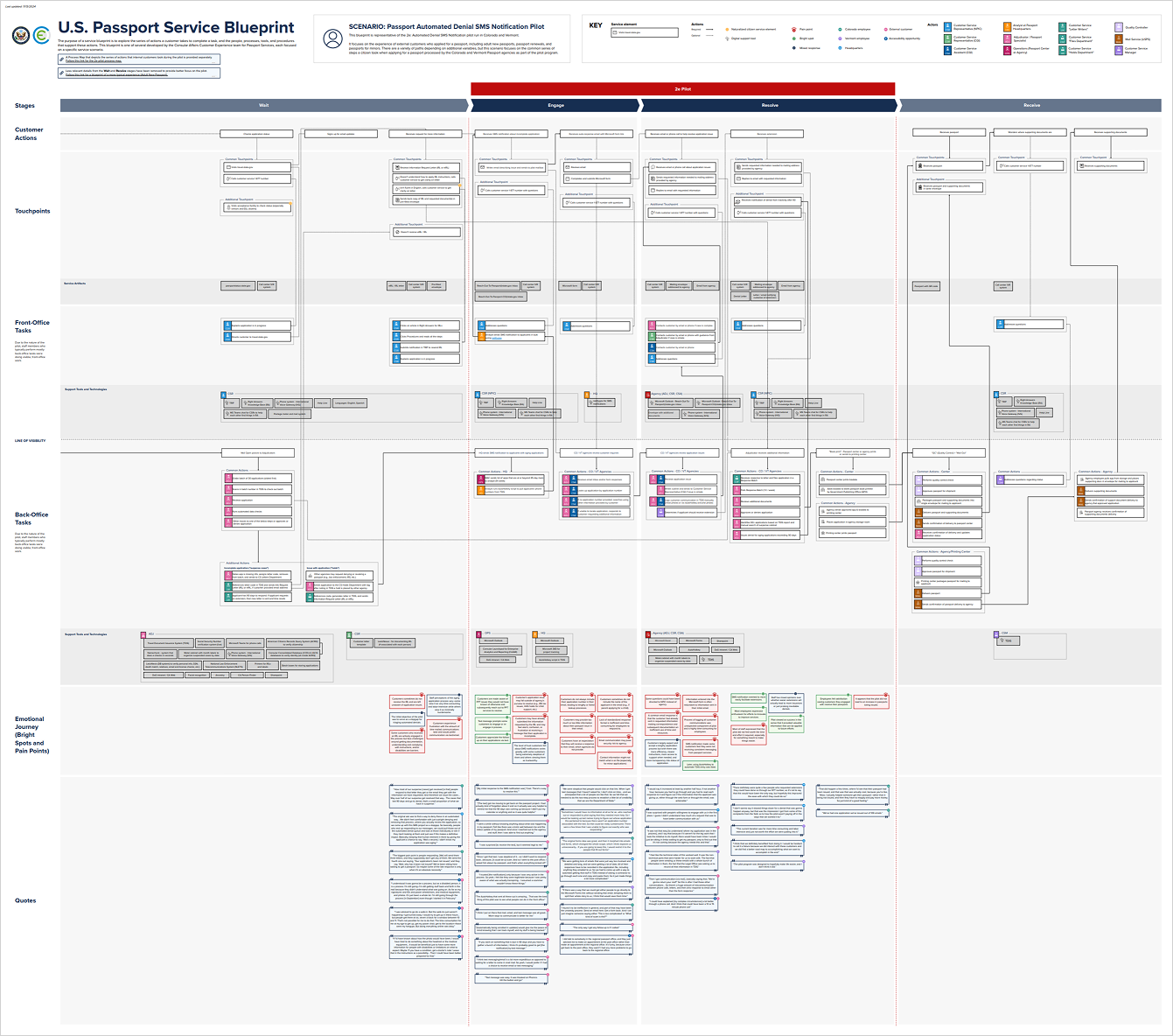
Service Blueprint Showing the End-to-End Pilot Workflow and Operational Touchpoints
MESSAGE ITERATION & USABILITY TESTINGWe tested how changes to notification content affected clarity, tone, and accessibility.
Partnering with a content designer, I helped refine SMS notification language and conducted usability testing to evaluate comprehension, emotional response, and accessibility considerations. Findings informed final recommendations and clarified CX requirements needed to support any future iteration or broader rollout.
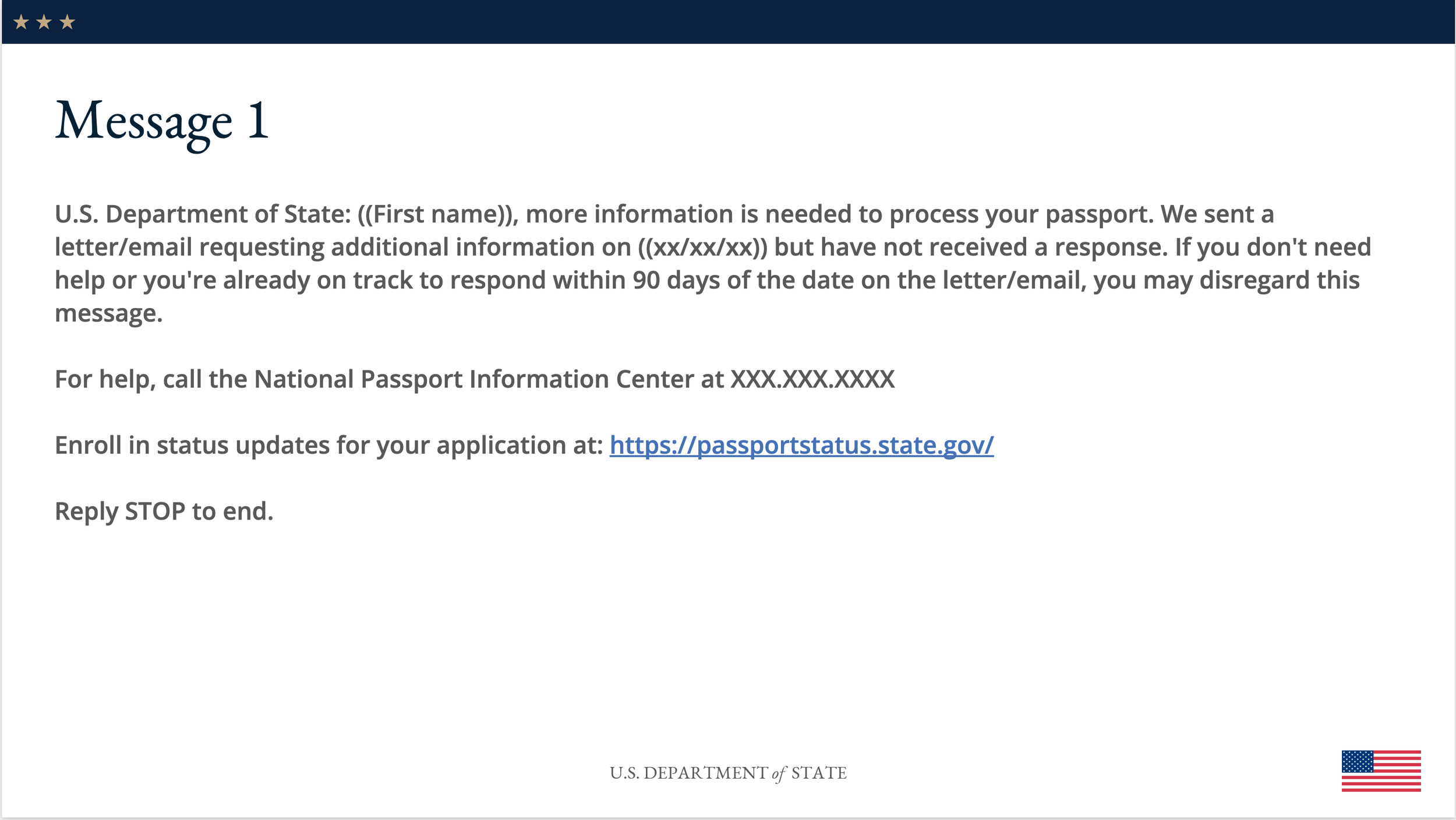
Example Notification Used in Content and Usability Testing to Evaluate Clarity, Tone, and Comprehension
FINAL SYNTHESIS & RECOMMENDATIONSWe translated research into decision-ready insights rather than prescriptive solutions.
I synthesized findings across research phases into final insights and recommendations that clarified customer needs, operational requirements, and risk considerations. Rather than advocating for immediate expansion, the work helped stakeholders assess readiness, understand tradeoffs, and identify conditions necessary for future implementation.
CHALLENGES & LESSONS LEARNEDEvaluating impact in a pilot shaped by execution constraints required balancing rigor, empathy, and pragmatism.
This research followed a pilot that surfaced operational challenges during execution, which influenced stakeholder confidence in iteration or broader rollout. Some partners were hesitant to explore additional concepts due to increased staff burden and inefficiencies introduced by the initial implementation—despite alignment on the underlying customer problem.
As a result, the research needed to operate within tight constraints: limited influence over pilot design, restricted opportunities for iteration, and a heightened focus on risk, readiness, and feasibility rather than solution expansion.
1
Research can still create value when iteration is limited. Even without the ability to redesign the system end-to-end, evaluating comprehension, response behavior, and downstream impact helped clarify what was and was not working—and why.
2
Execution quality shapes perception of feasibility as much as concept strength. Findings highlighted how implementation gaps (not the idea of automation itself) can erode trust and increase resistance to future experimentation.
3
Accessibility insights can surface systemic barriers beyond digital touchpoints. Even without broader rollout, accessibility findings surfaced friction across the application process, including limited staff support, physical challenges navigating in-person requirements, and unclear guidance for disability-related exceptions—highlighting opportunities for more consistent accommodations.
4
Decision-support is a valid—and often necessary—research outcome. In this context, success meant helping leaders make informed, cautious decisions about next steps, rather than pushing toward immediate scale.
Confidentiality Note
Due to confidentiality agreements, I’m unable to share detailed artifacts or detailed results publicly. The summaries above reflect my role, approach, and the types of outcomes the work supported.